 The 9th World Conference on Targeting Phage Therapy 2026 concluded in Valencia after two days of intense scientific exchange, clinical discussion and strategic reflection on the future of bacteriophage therapy.
This year’s meeting confirmed a clear message: phage therapy is no longer only a scientific promise. It is becoming a clinical, regulatory, manufacturing and industrial reality.
Across the sessions, leading experts discussed the full pathway needed to bring phage therapy closer to patients: phage biology, host–phage interactions, antimicrobial resistance, personalized treatment, compassionate use, GMP production, hospital implementation, regulatory frameworks, phage engineering and industrial innovation. Read More

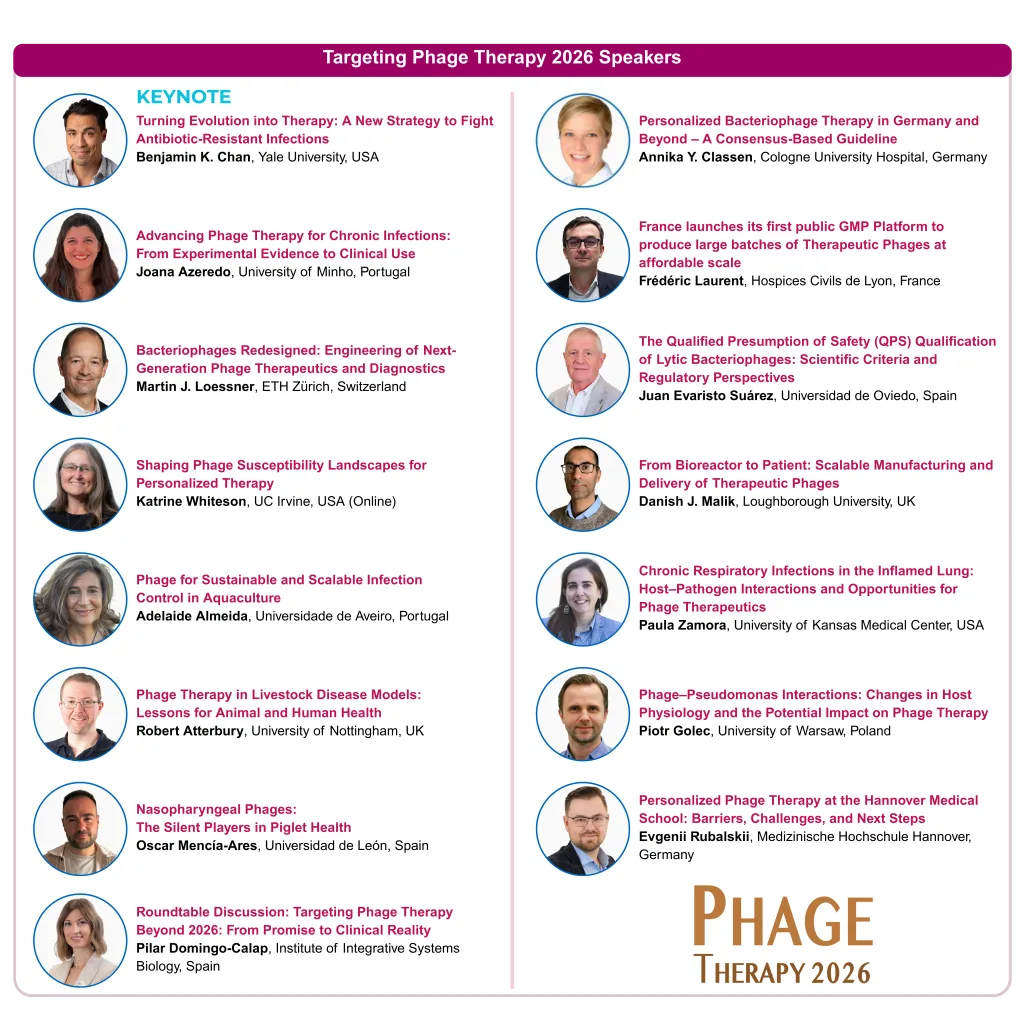
Turning Evolution into Therapy: A New Strategy to Fight Antibiotic-Resistant Infections
Benjamin K. Chan, Yale University, USA

Shaping Phage Susceptibility Landscapes for Personalized Therapy
Katrine Whiteson, UC Irvine, USA

Personalized Bacteriophage Therapy in Germany and Beyond – A Consensus-Based Guideline
Annika Y. Classen, Cologne University Hospital, Germany

The Qualified Presumption of Safety (QPS) Qualification of Lytic Bacteriophages: Scientific Criteria and Regulatory Perspectives
Juan Evaristo Suárez, Universidad de Oviedo, Spain

Chronic Respiratory Infections in the Inflamed Lung: Host–Pathogen Interactions and Opportunities for Phage Therapeutics
Paula Zamora, University of Kansas Medical Center, USA

From Bioreactor to Patient: Scalable Manufacturing and Delivery of Therapeutic Phages
Danish J. Malik, Loughborough University, United Kingdom

Phage for Sustainable and Scalable Infection Control in Aquaculture
Adelaide Almeida, Universidade de Aveiro, Portugal

Advancing Phage Therapy for Chronic Infections: From Experimental Evidence to Clinical Use
Joana Azeredo, University of Minho, Portugal

Bacteriophages Redesigned: Engineering of Next-Generation Phage Therapeutics and Diagnostics
Martin J. Loessner, ETH Zürich, Switzerland

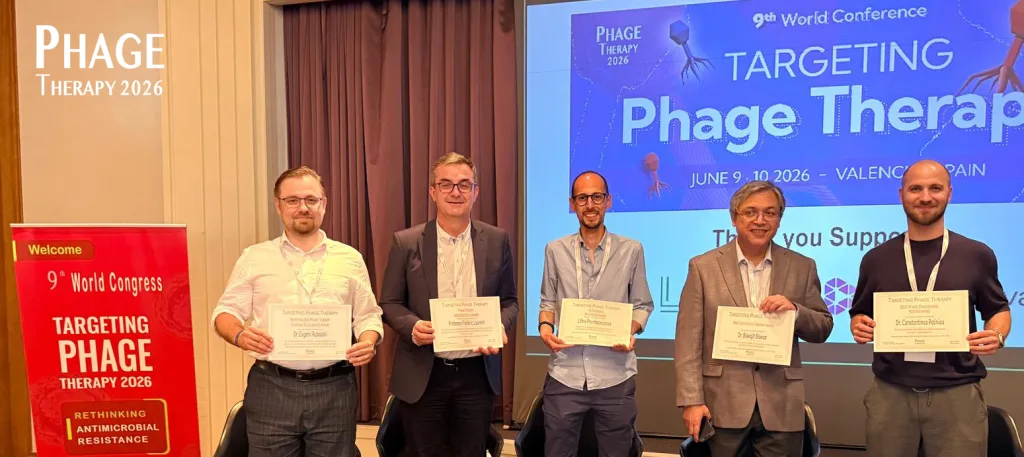
France launches its first public GMP platform to produce large batches of therapeutic phages at affordable scale
Frédéric Laurent, Hospices Civils de Lyon, France

Phage Therapy in Livestock Disease Models: Lessons for Animal and Human Health
Robert Atterbury, University of Nottingham, United Kingdom

Advancing Personalized Phage Therapy in Hannover: Clinical Experience and Translational Progress
Evgenii Rubalskii, Medizinische Hochschule Hannover, Germany

Unraveling the Nasopharyngeal Phageome in Post-Weaning Piglets: Advances and Perspectives
Oscar Mencía-Ares, Universidad de León, Spain

Phage–Pseudomonas Interactions: Changes in Host Physiology and the Potential Impact on Phage Therapy
Piotr Golec, University of Warsaw, Poland