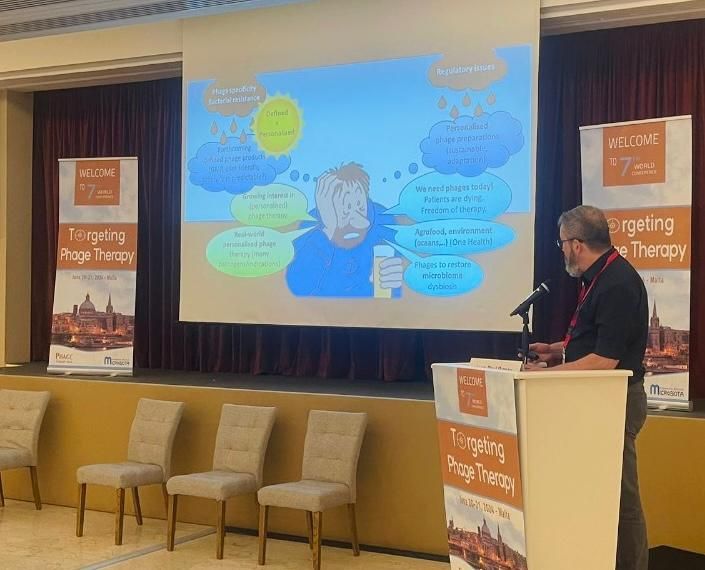
It is a great pleasure to announce that the 8th World Congress on Targeting Phage Therapy will be held on June 10-11, 2025, at DoubleTree by Hilton Berlin Ku’damm, Berlin, Germany.
Book your room

It is a great pleasure to announce that the 8th World Congress on Targeting Phage Therapy will be held on June 10-11, 2025, at DoubleTree by Hilton Berlin Ku’damm, Berlin, Germany.
Book your room

Industry Showcase:
Manufacturers interested in demonstrating their phage production pipelines and sharing insights are invited to contact us for presentation opportunities.
Phage Therapy 2024 Replay Access
You can catch up on all the details of the 7th World Conference of Targeting Phage Therapy by requesting access to the conference recordings for the period of 3 weeks.
The conference replay includes the 40+ major talks and short orals presented during the 2 days of Targeting Phage Therapy 2024.
It also comprises the different innovations presented by:
 and others..
Phage Therapy 2024 Replay Access + Abstracts Book
Benefit from both the Abstract Book and Recorded Sessions of Phage Therapy 2024 to stay tuned about all phage therapy novelties and not to miss out on the latest innovations and discovery in the vast world of phage applications.
Dr. Pirnay stated: “Sustainable personalized phage therapy approaches need to be facilitated through the creation of dedicated regulatory frameworks and the development of devices for the instant and on-site synthetic production of AI predicted therapeutic phages.
Phages are best used in synergy with other antimicrobials, or to quote Dr. Sabrina Green: “Phages Can Make Antibiotics Great Again”.”
Looking ahead, the progress in phage therapy will be a central focus at the Targeting Phage Therapy 2025 conference.
Targeting Phage Therapy 2024 conference replay is now available offering valuable perspectives on the latest advancements in phage therapy. Explore the latest breakthroughs in phage therapy and how they’re tackling antibiotic resistance via a 3 weeks access.
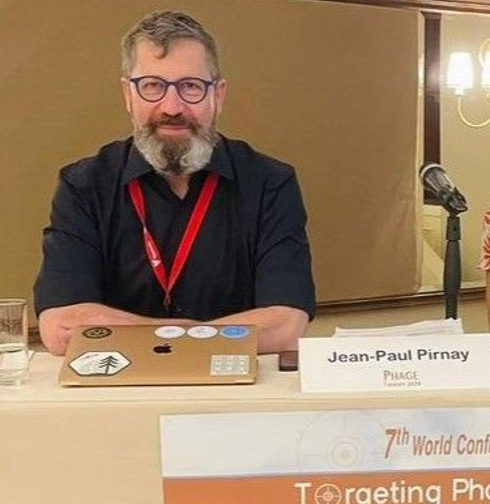
The Targeting Phage Therapy 2024 Best Scientific Contribution award was discerned to:
Jean-Paul Pirnay, Queen Astrid Military Hospital, Belgium
Dr. Pirnay, an active scientific board member, concluded the conference and presented an insightful presentation titled “Magistral Phage Preparations – Is This the Model for Everyone?”
In his presentation, Dr. Pirnay explored:
🔹 Phage therapy as a tool against antimicrobial resistance
🔹 Challenges with industrially manufactured phage products
🔹 Belgium’s national framework for personalized phage products
🔹 Potential for other countries to adopt similar frameworks
Dr. Pirnay’s extensive expertise in phage therapy and antimicrobial resistance continues to drive innovations in personalized phage treatments. His significant contributions to the field and the conference have been invaluable.
Congratulations to Dr. Pirnay on his well-deserved award and for advancing the field of personalized phage therapy.
You can learn about Dr. Pirnay’s insightful research to benefit from his experience in the Targeting Phage Therapy 2024 Replay and Abstracts Book.
Targeting Phage Therapy 2024 Congress
7th World Conference
June 20-21, 2024 – Malta
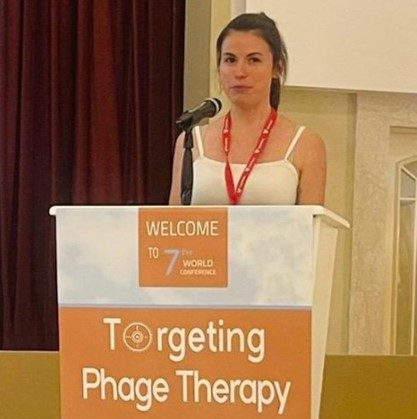
The Targeting Phage Therapy 2024 Best Short Oral Presentation award (2) was discerned to:
Nanobiotechnological Engineering of the M13 Bacteriophage for Targeted Photodynamic Cancer Therapy
Alena Kaltenbrunner, University of Bologna, Italy
Her study developed recombinant M13 phages displaying nanobodies specific to cancer markers EGFR and Her2, and conjugated with photosensitizers. These engineered phages demonstrated high specificity and efficacy in targeting and eradicating cancer cells through light-induced cytotoxicity, showcasing their potential as innovative tools for cancer treatment.
Ms. Kaltenbrunner stated: “As a PhD student at the University of Bologna’s Molecular Biotechnology Lab under the guidance of Alberto Danielli, my research is centered on the nanobiotechnological engineering of the M13 bacteriophage for targeted photodynamic cancer therapy (PDT). We have successfully developed several highly specific phages targeting different overexpressed cancer markers. Our preliminary results in 2D cultures are very promising and our future steps involve testing this therapy in 3D cultures to pave the way for a novel, less toxic, and highly specific alternative cancer treatment.”
You can learn about this inspiring finding and talk in Targeting Phage Therapy 2024 Replay and Abstracts Book.
Targeting Phage Therapy 2024 Congress
7th World Conference
June 20-21, 2024 – Malta
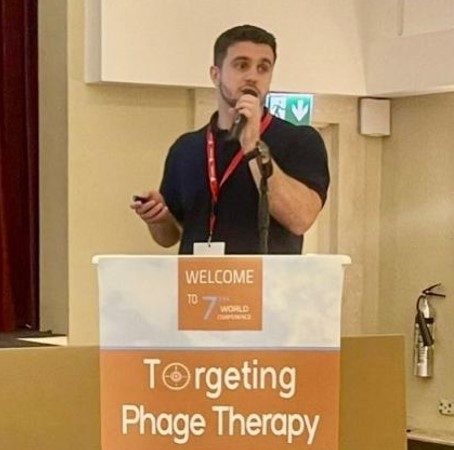
The Targeting Phage Therapy 2024 Best Short Oral Presentation award was discerned to:
Neutralizing Antibodies After Nebulized Phage Therapy in Cystic Fibrosis Patients
Marco Pardo-Freire, University of Valencia, Spain
His research demonstrated that nebulized phage therapy significantly reduces bacterial load in Cystic Fibrosis (CF) patients with lung infections and highlighted the emergence of phage-neutralizing antibodies, emphasizing the need for long-term immune response monitoring. Learn more.
Currently, as part of his PhD, Mr. Pardo-Freire is focused on the study and understanding of micobacteriophages for use in therapy, including different species of Mycobacterium such as Mycobacterium abscessus to Mycobacterium tuberculosis, but he is also involved in the development of new compassionate use treatments with phages in Spain.
You can learn about this inspiring finding and talk in Targeting Phage Therapy 2024 Replay and Abstracts Book.
Targeting Phage Therapy 2024 Congress
7th World Conference
June 20-21, 2024 – Malta
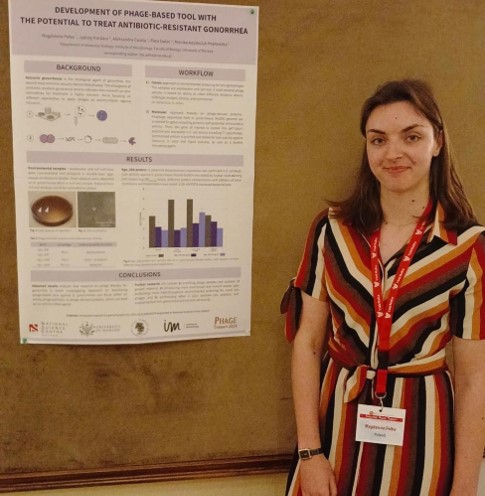
The Targeting Phage Therapy 2024 Best Poster Presentation award was discerned to:
Development of Phage-based Tool with the Potential to Treat Antibiotic-Resistant Gonorrhea
Magdalena Pelka, University of Warsaw, Poland
Ms. Pelka’s research focused on developing a phage-based tool to treat antibiotic-resistant gonorrhea. Her work involves isolating and characterizing phages with lytic activity against Neisseria gonorrhoeae, aiming to provide an effective alternative to traditional antibiotics.
The project of fighting against antibiotic-resistant gonorrhea has several approaches. The research group including Ms. Pelka aim to find a lytic phage against Neisseria by screening environmental samples. Another approach is selecting and synthesizing prophage-encoded proteins with potential antimicrobial activity.
Ms. Pelka stated: “So far we’ve screened wastewater samples against wild-type, commensal, mutant and clinical Neisseria strains. We also performed optimization of obtaining the first two lytic proteins (depolymerases). Our research shows that both approaches have the potential to result with a phage-based tool working against gonorrhea. In the near future we will improve the screening process, making it more high-throughput and extensive. We will also enhance the molecular work by optimizing expression and purification of the proteins, as well as further testing, also on human cells for cytotoxicity.”
You can learn about this insightful discovery and well executed poster in Targeting Phage Therapy 2024 Abstracts Book.
Targeting Phage Therapy 2024 Congress
7th World Conference
June 20-21, 2024 – Malta
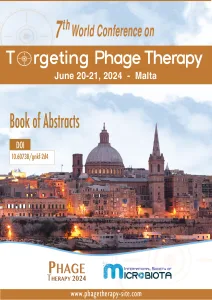
The Targeting Phage Therapy 2024 Abstract Book has been released.
You can now gain access to the abstracts of 40 communications, featuring major talks, short orals, and posters, highlighting advancements in phage therapy.
Phage Therapy 2024 Communications
You can learn more about the communications in the conference program: www.phagetherapy-site.com/Program.
How to Access Abstracts Book
Order the abstracts book and unlock the DOI: https://buy.stripe.com/eVa8Aoeez5aKdDG5kP
The rising threat of antibiotic-resistant bacterial infections has spurred extensive research into alternative therapeutic strategies. Bacteriophages (phages), viruses that infect bacteria, have emerged as a promising tool in combating resistant pathogens. The recent collection of oral presentations provides a comprehensive overview of the latest advancements in phage therapy and antimicrobial research.
Oral Presentation Summaries and Scientific Impacts
1. Phage Resistance Characterization of a Phage Cocktail Targeting Pseudomonas aeruginosa Associated to Lung Infections
Clara Leandro, Technophage, Portugal
This study characterizes the resistance profiles of Pseudomonas aeruginosa to a specific phage cocktail.
Impact: Aids in optimizing phage cocktail formulations for better clinical outcomes in treating lung infections.
2. Bacteriophage Genome Annotation: Comparing Automatic and Manual Approaches
Antoine Culot, Rime Bioinformatics, France
This presentation compares different methods for annotating bacteriophage genomes.
Impact: Enhances the accuracy and efficiency of genome annotation, which is vital for phage research and therapy development.
3. Nanobiotechnological Engineering of the M13 Bacteriophage for Targeted Photodynamic Cancer Therapy
Alena Kaltenbrunner, University of Bologna, Italy
This research explores the engineering of M13 bacteriophage for use in targeted photodynamic cancer therapy.
Impact: Represents a novel approach to cancer treatment, leveraging phage technology for targeted therapy.
4. High-Throughput Time-resolved Measurement of Phage Infection Cycles in Individual Cells
Somenath Bakshi, University of Cambridge, United Kingdom
This study develops a high-throughput imaging assay to track the steps of infection cycle from individual phages in individual cells of bacteria in timelapse manner.
Impact: This assay enables kinetic profiling of phage-bacteria interactions, which can be used to screen for resistance mechanisms in bacteria towards specific phages or to screen for effective phages to target specific bacteria.
5. Bacteriophage Host Ranges: A Key to the Two Therapy Strategies
Ivan M. Pchelin, Institute of Experimental Medicine, Russia
This study investigates the host ranges of bacteriophages and their implications for therapy strategies.
Impact: Provides insights that can inform the selection and use of phages in therapeutic contexts.
6. The Burden of Resistance: a Comprehensive Analysis of V. harveyi Mutants Resistant to Phages
Stavros Droubogiannis, Hellenic Centre for Marine Research, Greece
This study analyzes the resistance mechanisms of V. harveyi mutants to phages.
Impact: Enhances understanding of phage resistance, contributing to better management strategies in marine and medical contexts.
7. Bacteriophage-based Cleaning Approaches to Eradicate Salmonella infantis in Broiler Farms
Sandra Sevilla, Centro de Calidad Avícola y Alimentación Animal de la Comunidad Valenciana, Spain
This research presents phage-based cleaning methods to eliminate Salmonella infantis in poultry farms.
Impact: Offers a sustainable and effective solution for improving biosecurity in the poultry industry.
8. Production of Phage Products for Various Applications
Frenk Smrekar, JAFRAL’s CEO, Slovenia
This presentation discusses the production processes and applications of various phage products.
Impact: Showcases the commercial potential and diverse applications of phage products in medicine and industry.
9. Efficacy of Mycobacteriophage D29 Against Intracellular Mycobacterium smegmatis
Daria Smalchuk, Germans Trias i Pujol Research Institute, Spain
This study investigates the effectiveness of Mycobacteriophage D29 in targeting and killing intracellular Mycobacterium smegmatis, a model organism for Mycobacterium tuberculosis.
Impact: This research provides critical insights into the use of phages to target intracellular bacterial pathogens, potentially revolutionizing treatments for diseases like tuberculosis. The ability to effectively target intracellular pathogens represents a significant advancement in phage therapy, addressing a challenging aspect of infectious disease treatment.
10. Neutralizing Antibodies After Nebulized Phage Therapy in Cystic Fibrosis Patients
Marco Pardo-Freire, University of Valencia, Spain
This study examines the production of neutralizing antibodies in cystic fibrosis patients undergoing nebulized phage therapy.
Impact: Understanding immune responses to phage therapy can help optimize treatments, making them safer and more effective for chronic conditions like cystic fibrosis. The ability to nebulize phages for respiratory conditions, and the understanding of the immune response, is highly innovative and holds promise for treating other chronic respiratory infections.
11. Hydrogel Beads for Targeted/Controlled Phage Delivery in the Gastrointestinal Tract
Farzaneh Moghtader, TiPHAGE San.Tic, Turkey
This research presents the development of hydrogel beads designed for targeted and controlled delivery of phages in the gastrointestinal tract.
Impact: Enhances the efficacy and precision of phage therapy for gastrointestinal infections. The innovation of using hydrogel beads for controlled release in the GI tract is a significant advancement, ensuring that phages are delivered effectively to the site of infection, which can improve therapeutic outcomes and reduce side effects.
12. Successful Phage Treatment in a Cystic Fibrosis Patient with Acute Rejection Following Two Bilateral Lung Transplants
Mireia Bernabeu-Gimeno, Universitat De València, Spain
This case study reports the successful use of phage therapy to treat a cystic fibrosis patient experiencing acute rejection after lung transplants.
Impact: Demonstrates the potential of phage therapy in complex clinical scenarios, offering hope for patients with limited treatment options.
13. Bridging to Lung Transplantation: Personalized Phage Therapy for a Cystic Fibrosis Patient Infected with Burkholderia multivorans
Evgenii Rubalskii, Hannover Medical School, Germany
This study explores the use of personalized phage therapy to manage Burkholderia multivorans infection in a cystic fibrosis patient awaiting lung transplantation.
Impact: Highlights the importance of personalized medicine and the role of phage therapy in managing resistant infections pre-transplantation.
14. Bacteriophages as Commercial Tools for the Treatment of Civilization Skin Disorders Like Acne or Eczema
Vendula Ficelová, Aumed, Czech Republic
This study explores the use of bacteriophages in treating common skin disorders such as acne and eczema.
Impact: Offers a novel, natural alternative to traditional treatments for widespread dermatological conditions.
15. Determining the Main Causes of Phage Resistance in Clinical Strains of Pseudomonas aeruginosa
Cindy Fevre, Phaxiam Therapeutics, France
This research identifies the primary mechanisms behind phage resistance in clinical strains of Pseudomonas aeruginosa.
Impact: Provides crucial information for developing strategies to overcome phage resistance, improving phage therapy effectiveness.