Phage Therapy 2023 Concluding Remarks: Future Perspectives

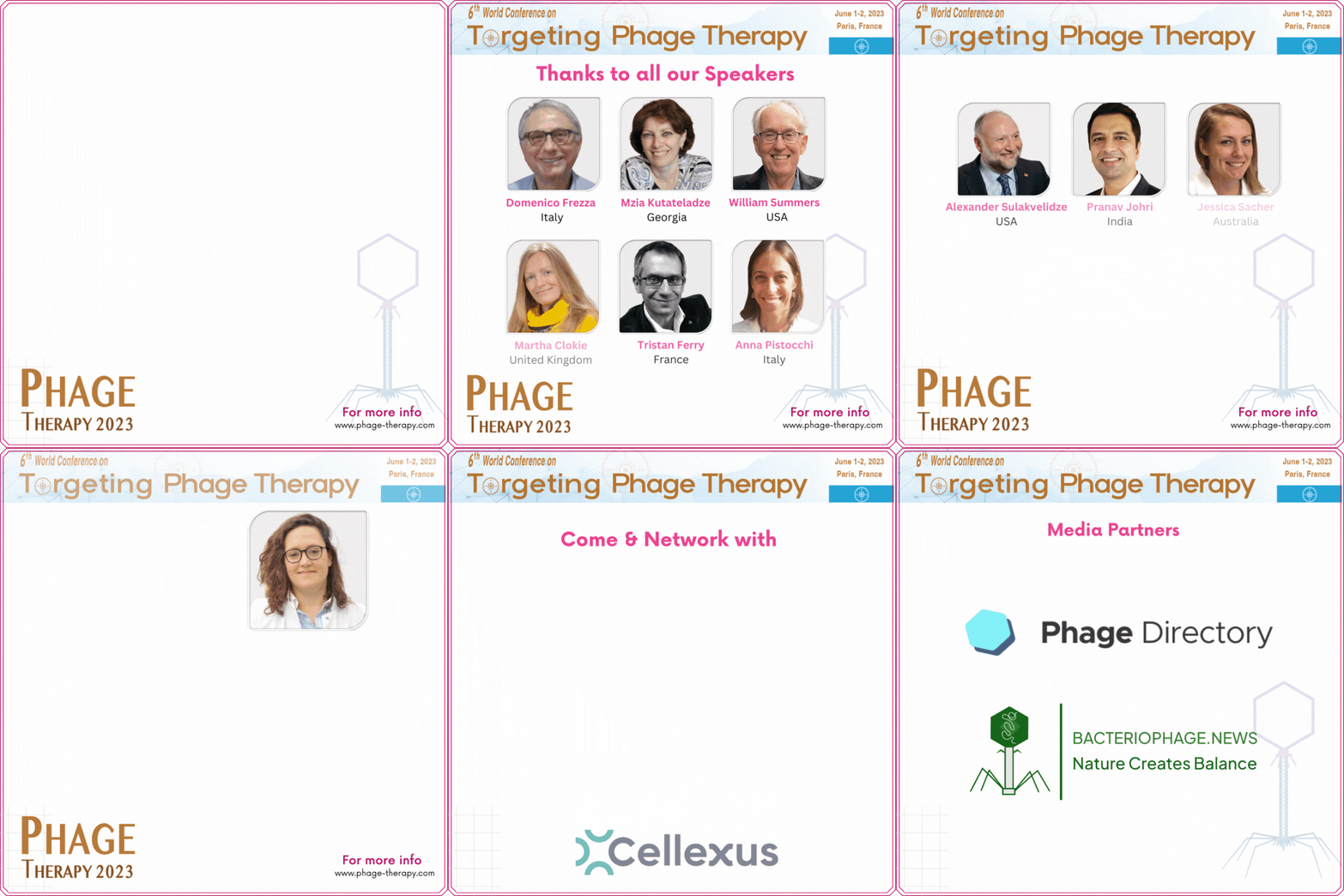
The 6th World Congress on Targeting Phage Therapy 2023 that was held on June 1-2 in Paris, and gathered more than 150 attendees from 30+ different countries. Targeting Phage Therapy 2023 included more than 71 presentations between major talks, short orals, and posters.

The president of Phage Therapy 2023, Prof. Domenico Frezza, and the chairman of the scientific committee, Prof. Marvin Edeas, stated: “It’s wonderful to hear that the speakers at the Targeting Phage Therapy 2023 conference delivered excellent presentations on a variety of fantastic topics. The fact that new findings and original results were shared suggests that the field of phage therapy is advancing and contributing to the development of a new kind of medicine. Phage therapy holds immense potential in addressing the challenge of antibiotic resistance and improving treatment options for bacterial infections. The research and discussions presented at the conference likely showcased the progress and possibilities of this innovative therapeutic approach.”

The Future of Phages

Dr. Marvin Edeas presented a talk on phages and microbiota, he commented, Phages have the potential to play a significant role in shaping our microbiota and influencing various effects within our bodies. The human microbiota, which consists of trillions of microorganisms including bacteria, viruses, and phages, is known to have a profound impact on our health and well-being. Phages, being viruses that specifically target bacteria, can modulate the composition and dynamics of the microbiota by selectively infecting and killing certain bacterial species. This process, known as “phage predation,” can lead to shifts in bacterial populations and the overall balance of the microbiota.

Furthermore, phages can impact the functions and interactions within the microbiota. They can transfer genes between bacteria through a process called horizontal gene transfer, influencing the genetic makeup and capabilities of bacterial communities. This transfer of genetic material can contribute to the spread of antibiotic resistance genes or confer beneficial traits to bacteria, such as the ability to digest certain substances or resist pathogens.

Phages can also have indirect effects on human health by modulating the immune system. They can interact with immune cells and trigger immune responses, potentially influencing immune function and the body’s ability to respond to infections or diseases.

Overall, the interplay between phages, bacteria, and the human microbiota is a complex and fascinating area of research. Understanding and harnessing the power of phages in modulating the microbiota holds great potential for developing innovative therapeutic approaches, improving health outcomes, and addressing various health challenges.

What about Phage and Non-Infectious Disease?

Dr. Edeas strongly convinced that the potential applications of phages extend beyond their traditional use in treating bacterial infections. Emerging research suggests that phages could have therapeutic implications in a variety of non-infectious diseases, including obesity, cancer, and even mental health conditions like depression. However, it’s important to note that while these possibilities are being explored, the field is still in its early stages, and more research is needed to fully understand the mechanisms and effectiveness of phage therapy in these areas.

Targeting Phage Therapy 2023 Awards

Four Awards were decerned. Here’s a summary of the recognized presenters and their contributions:

I. Martha Clokie (University of Leicester, United Kingdom) received the Phage Therapy 2023 Best Scientific Contribution award. Her presentation titled “Challenges and Opportunities for Bacteriophage Therapy” focused on her team’s work in an agricultural setting. She highlighted the insights gained in terms of safety, efficacy, dosing, and the use of phages to target urinary tract pathogens. Clokie emphasized that bacteriophage therapy shows promise in addressing antibiotic resistance and improving treatment options for bacterial infections and microbiome manipulation.

II. Amanda (Curtis) Burkardt, the CEO of PHIOGEN (USA), was awarded the Phage Therapy 2023 Best Scientific Innovation for their technology platform. Burkardt’s presentation titled “Creating Patient Ready Products in a Remedy Ready World” highlighted PHIOGEN’s proprietary technology platform. This platform enables the discovery, screening, and evolution of naturally occurring bacteriophages with exceptional bacteria-fighting abilities. It allows the development of antimicrobials that can overcome resistance. This innovation offers a new business model for phage therapy, enabling the creation of products that can treat entire populations instead of individual patients.

III. The Phage Therapy 2023 Best Short Oral award went to Brieuc Van Nieuwenhuyse from UC Louvain, Belgium. His presentation focused on “Bacteriophage-Antibiotic Combination Therapy Against Extensively Drug-Resistant Pseudomonas Aeruginosa Infection to Allow Liver Transplantation in a Toddler.” Dr. Van Nieuwenhuyse emphasized the importance of considering bacteriophage therapy as a therapeutic option to combat antimicrobial-resistant bacterial infections, particularly in cases where traditional medical practitioners may overlook this potential solution.

IV. The Targeting Phage Therapy 2023 Best Poster award was given to Pantiora Panagiota from the Agricultural University of Athens, Greece. Her poster presentation was titled “Thermostable Bactericidal Endolysin Discovery: New Ways to Fight Bacterial Pathogens – Metagenomics Analysis for the Discovery of a Thermostable Endolysin With High Bactericidal Activity.” This research likely focused on the discovery and potential application of a thermostable endolysin, which is an enzyme that can degrade the cell walls of bacteria, leading to their destruction.

Current challenges and future prospects:

While phage therapy shows great promise, there are still challenges to overcome before it becomes widely available.

  • Regulatory hurdles: Regulatory frameworks for phage therapy vary across different countries, and establishing standardized guidelines is essential.
  • Phage selection: Identifying the most effective phages for specific bacterial strains can be time-consuming and complex.
  • Clinical trials: Rigorous clinical trials are needed to evaluate the safety and efficacy of phage therapy in different patient populations.

Despite these challenges, phage therapy holds significant potential. Ongoing research aims to optimize phage therapy protocols, develop phage cocktails, and improve delivery mechanisms to enhance its efficacy. Phage therapy, in combination with other advances in personalized medicine and immunotherapy, could revolutionize the treatment of bacterial infections and shape the future of medicine.

How phage therapy could influence the future of medicine:

  1. Antibiotic Resistance: The global health community is grappling with the increasing prevalence of antibiotic resistance. As more bacteria evolve resistance to our current arsenal of antibiotics, the effectiveness of these treatments decreases. Phage therapy could offer a solution to this problem as phages are capable of infecting and killing even antibiotic-resistant bacteria.
  2. Precision Medicine: Phages are highly specific to the bacterial strains they infect. This means they could potentially be used for more targeted therapies than broad-spectrum antibiotics, which can disturb the gut microbiota and lead to side effects. This specificity aligns with the broader trend towards precision medicine, which aims to tailor treatment to individual patients based on their unique genetic, environmental, and lifestyle factors.
  3. Phage Therapy Research: There is a resurgence of interest in phage therapy research due to the mounting crisis of antibiotic resistance. This research is producing promising results, but there are still many challenges to be overcome. These include determining the safety and efficacy of phage therapy, regulatory and manufacturing hurdles, and the need for more controlled clinical trials.
  4. Bioengineering: With advancements in biotechnology, it is possible to genetically modify phages or engineer synthetic ones. This could allow us to create phages that are even more effective at combating bacteria, or that carry genes which make bacteria more susceptible to other treatments.
  5. Diagnostics: Phages can be used to detect specific bacteria in diagnostic tests. This could help clinicians identify the cause of an infection more quickly and accurately, leading to more effective treatment.
  6. Environmental applications: Besides human health, phage therapy can also be used in agriculture to combat bacterial diseases in crops or farm animals, and in food safety to kill foodborne pathogens.

While phage therapy holds great promise, it’s important to note that much more research is needed to understand how best to use phages in a clinical setting. Phages are incredibly diverse and complex, and our understanding of phage-bacteria interactions is still in its infancy. It’s also crucial to consider potential risks and challenges, such as the possibility of bacteria developing resistance to phages, the potential for phages to transfer harmful genes between bacteria, and the need for robust regulation and quality control in phage production.


For those interested in accessing the materials and videos from the conference, the organizers offer the opportunity to request access to the replay and abstracts book. Additionally, conference recordings are available on demand for a period of three weeks. This allows participants and others interested in the field of phage therapy to catch up on the details and insights shared during the conference.

Conference Materials and Replay.


Targeting Phage Therapy 2023 Congress
6th World Conference Conclusion
June 1-2, 2023 – Paris, France


Phage Therapy 2023 Videos on Demand


Phage Therapy 2023 Replay Access 

You can catch up on all the details of the 6th World Conference of Targeting Phage Therapy by requesting access to the conference recordings for the period of 3 weeks. 

The conference replay includes the 40+ major talks and short orals  presented during the 2 days of Targeting Phage Therapy 2023.

It also comprises the different innovations presented by:

and others..

Order Recordings.


Phage Therapy 2023 Replay Access + Abstracts Book

Benefit from both the Abstract Book and Recorded Sessions of Phage Therapy 2023 to stay tuned about all phage therapy novelties and not to miss out on the latest innovations and discovery in the vast world of phage applications.

Order the abstract book and recordings.

Who Attended Targeting Phage Therapy 2023?

Industrial participants:
PHIOGEN (USA)
Armata Pharmaceuticals (USA)
BiomX (Israel)
Acteryon (Poland)
Cellexus (UK)
Adaptive Phage Therapeutics (USA)
Aparon (UK)
AusHealth (Australia)
Biochimpharm JSC (Georgia)
BIOCODEX (Paris)
BIOMERIEUX SA (France)
COBIK (Slovenia)
ERYTECH Pharma (France)
H Venture Partners (USA)
H Ventures (USA)
Intralytix, Inc. (USA)
Jafral (Slovenia)
MB Pharma s.r.o. (Czech Republic)
Microbiotix Inc. (USA)
Optipharm Inc. (Republic of Korea)
Phage Consulting
Phages2Patients (Germany)
Phagos (France)
Pherecydes Pharma (France)
Proteon Pharmaceuticals S.A. (Poland)
R.E.D. Laboratories (Belgium)
Resistell (Switzerland)
Rime Bioinformatics (France)
Sanofi (USA)
SET Medikal (Turkey)
TechnoPhage (Poland)
Tillotts Pharma AG (Switzerland)
Vésale Bioscience (Belgium)
Vetoquinol (France)
Vitalis Phage Therapy (India)


Academic participants:

Adam Mickiewicz University,Agricultural University of Athens, Amrita Universit, Armata Therapeutics, Azabu University, Bacteriophage.news, Baylor College of Medicine, Bhabha Atomic Research Centre, Biological Research Centre, Szeged, Campus Universitaire de Maubeuge, Centre International de Recherche en Infectiologie, Chungnam Natl. Univ., Comenius University, Communicable Diseases Institute, Consejo Superior de Investigaciones Científicas, Corpo De Bombeiros Militar Do Amazonas, Corpo De Bombeiros Militar Do Amazonas / Fundação Universidade Aberta Da Terceira Idade, CY Paris Cergy Université, Department of Veterinary Medicine, Institute of Pharmacology and Toxicology, Free University Berlin, Deutsches Zentrum für Infektionsforschung, ENS de Lyon, Eötvös Loránd University,FAMETRO / FUNATI,FDA, Federal Research and Clinical Center of Intensive Care Medicine and Rehabilitology, Food and Drug Administration (FDA), Fundação Universidade Aberta Da Terceira, Fundación AZTI, G. Eliava Institute of Bacteriophages, microbiology and virology, Geneva University Hospitals, German Center for Infection Research (DZIF), German Federal Institute for Risk Assessment, Helmholtz Center Munich, Hirszfeld Institute of Immunology and Experimental Therapy, Hôpitaux Unversitaires de Genève, Hospices Civils de Lyon, IDADE,IIBR, Ilia state university, INSERM, Institut Pasteur, Instituto de Biología Integrativa de Sistemas (I2SysBio) Universitat de València-CSIC, Israel Institute for Biological Research, Istanbul University, Istinye University, Jomo Kenyatta University of Agriculture and Technology, Khon Kaen University, Korea Advanced Institute of Science and Technology (KAIST), KU Leuven,Kyorin University, Laboratoire ERRMECe, Laboratoire M2iSH, Lesaffre International, Louvain University, Masaryk University, Max Planck Institute for Medical Research, Medical center Francesc Macia, MPI, National Taiwan University,- North-West Unversity, Pediatric Infectious Diseases Research Center, Phage Consulting, Phage Directory, Pharmabiotic Research Institute (PRI), Polish Academy of Sciences, Prof. Waclaw Dabrowski Institute of Agricultural and Food Biotechnology – State Research Institute, Queen Astrid Military Hospital, Burn Wound Centre, LabMCT Brussels, Sofia University, Stockholm University, TailΦr Labs, Baylor College of Medicine, The Chinese University of Hong Kong, The University of Queensland, TiHo Hannover, Tokyo institute of technology, U.S. Army Medical Research Institute, Uliège, Umeå University, Universidad de Córdoba, Universidade de Aveiro, Universidade Federal de São Paulo,- Università degli Studi di Milano, Università del Piemonte Orientale “A. Avogadro”, Universitat de València, Universitätsmedizin Rostock, Université Clermont Auvergne, Laboratoire M2iSH, University College London, University Hospital Regensburg, University of Copenhagen, University of Edinburgh, University of Exeter, University of Helsinki, University of Leicester, University of Milano, University of Pisa, University of Rome Tor Vergata, University of the Punjab, University of Verona, US Army Medical Research Directorate-Georgia (USAMRD-G),Victor Babeş University of Medicine and Pharmacy, Waseda University, Westmead Institute for Medical Research, Yale University,Yevdokimov Moscow State University for Medicine and Dentistry

Payment test 2

Test with Takayama account:

If you wish to register as a student, please use this link: https://buy.stripe.com/8wM4hlfV2egPareaEG

Other link, different invoice: https://buy.stripe.com/fZebJN108fkT9na003.

Registration without invoice: https://buy.stripe.com/9AQ6ptaAI2y7eHu4gk.

If you wish to become a member, please use this link (test link): https://buy.stripe.com/test_8wM9CPa4kfky3KwaEE. Or you can pay by scanning the following QR code.


Test with WMS account:

If you wish to register as a student, please use this link: https://buy.stripe.com/14k8yHfLuePP3mwdQQ

Other link for registration: https://buy.stripe.com/eVa9CL7eY7nn1eo6op

If you wish to become a member, please use this link (test link): https://buy.stripe.com/test_28o8y5gE00DmcU04gg