Vibrio cholerae CBASS System Revolutionizes Antibiotic Sensitivity

Vibrio cholerae CBASS System Revolutionizes Antibiotic Sensitivity

Vibrio cholerae CBASS System Revolutionizes Antibiotic Sensitivity

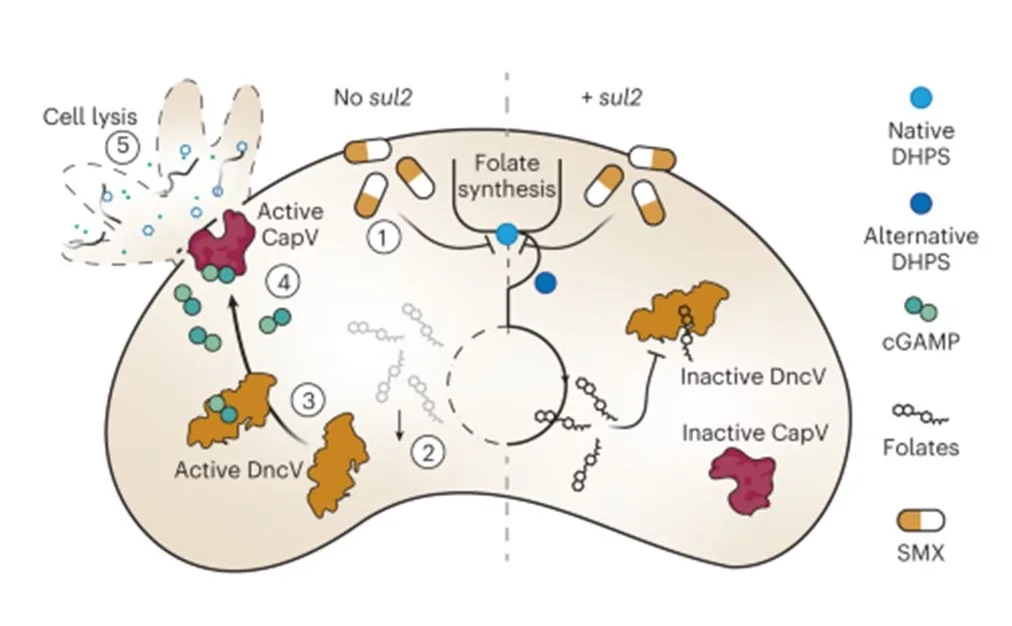
On-target antifolate activity is essential for CBASS–antifolate interaction in V. cholerae.

A recent study led by Ana Rita Brochado, published in Nature Microbiology, shed light on the modulation of resistance and killing by antifolate antibiotics through the Vibrio cholerae CBASS phage defense system.

In their research, Brochado and her team, discovered that the cyclic-oligonucleotide-based anti-phage signaling system (CBASS) in Vibrio cholerae increases sensitivity to antifolate antibiotics by up to 10 times. This system also interferes with the synergy of these antibiotics, ultimately leading to bacterial lysis by these classic bacteriostatic antibiotics.

The study revealed that cyclic-oligonucleotide production by the CBASS nucleotidyltransferase DncV upon antifolate treatment confirms full CBASS activation under these conditions. It suggests that antifolates release DncV allosteric inhibition by folates. Moreover, the interaction between CBASS and antifolates is specific to CBASS systems with closely related nucleotidyltransferases and similar folate-binding pockets.

Additionally, the research found that antifolate resistance genes nullify the CBASS-antifolate interaction by bypassing the effects of on-target antifolate activity. This creates potential for their coevolution with CBASS.

In summary, the findings illustrate how toxic modules such as CBASS can influence antibiotic activity, ultimately conferring bactericidal activity to classical bacteriostatic antibiotics. This discovery offers new insights into antibiotic resistance mechanisms and potential avenues for the development of novel antimicrobial strategies.

Article DOI.

Photo Credits: Brenzinger, S., Airoldi, M., Ogunleye, A.J. et al.  Nat Microbiol 9, 251–262 (2024). 

Nearly complete structure of bacteriophage DT57C has been revealed

Nearly complete structure of bacteriophage DT57C has been revealed

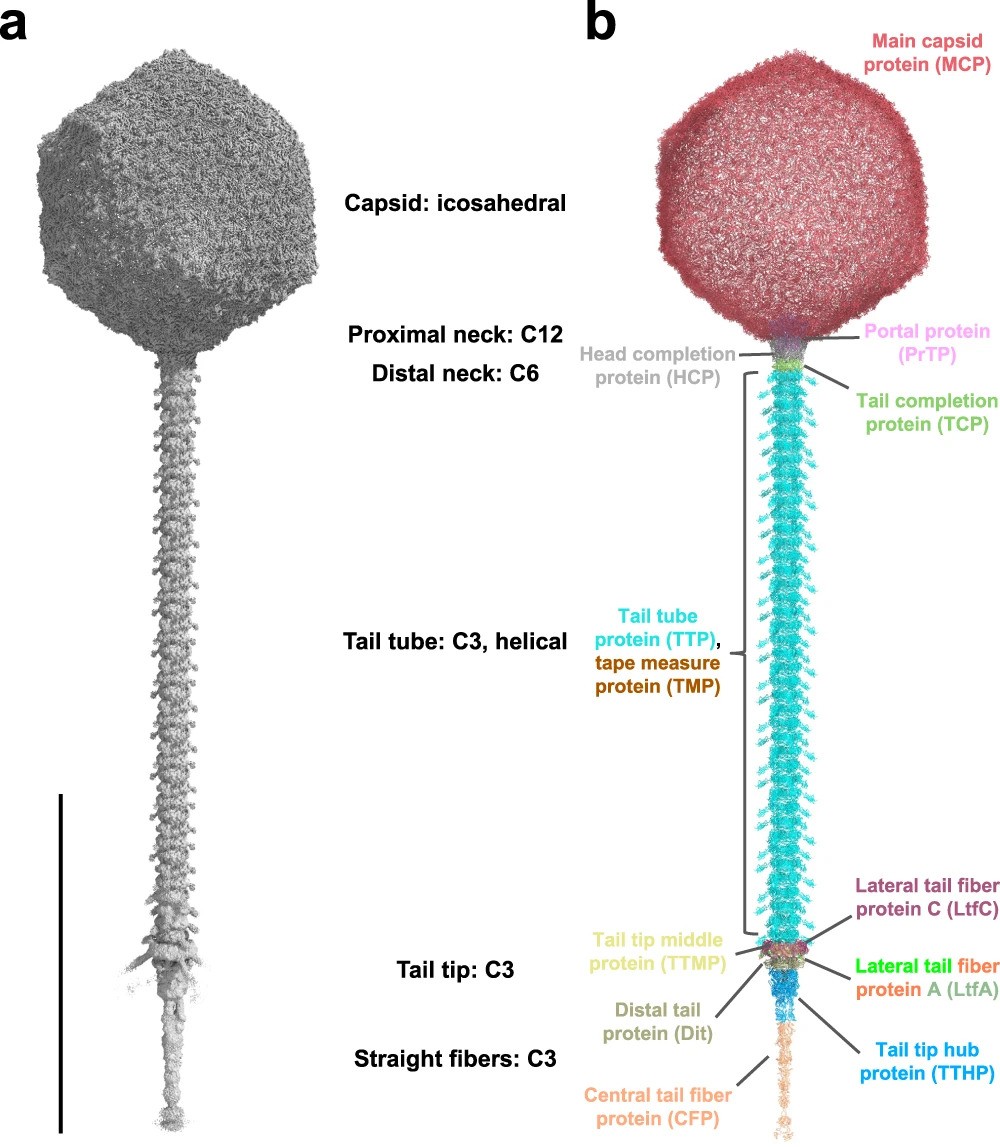
Architecture of the DT57C bacteriophage.

Scientists have unraveled the intricate molecular structure of bacteriophage DT57C, a member of the T5 family of tailed bacteriophages. These viruses are characterized by a long non-contractile tail and play a vital role in controlling bacterial populations. The DT57C bacteriophage, closely related to the well-known T5 phage, exhibits unique characteristics, including recognition of a distinct receptor (BtuB) and highly divergent lateral tail fibers (LTF).

Using advanced cryo-electron microscopy techniques, researchers obtained a comprehensive atomic model of the DT57C virus. This detailed structural analysis allowed for a deeper understanding of its organization and function. Notably, the study revealed novel features such as the mechanism of lateral tail fiber attachment, facilitated by a dodecameric collar protein (LtfC), and the composition of the phage neck, which consists of three protein rings.

Of particular interest was the arrangement of the tape measure protein (TMP) within the tail tube—a three-stranded parallel α-helical coiled coil that directly interacts with the viral DNA. Remarkably, the presence of the C-terminal fragment of TMP within the tail tip suggests a mechanism for the restoration of the tail tip complex after DNA ejection, shedding light on the process of infection and replication.

These findings not only provide a complete atomic structure of a T5-like phage but also offer insights into fundamental aspects of viral biology, including the process of DNA ejection. Furthermore, the structural details uncovered in this study lay the groundwork for the design of engineered phages with enhanced therapeutic potential and pave the way for future mechanistic investigations.

The development of new methods to tackle the challenges associated with visualizing complex viral structures demonstrates the interdisciplinary nature of this research and its potential impact on various fields, including phage therapy, gene therapy, and bioremediation. By elucidating the molecular architecture of bacteriophage DT57C, scientists have opened doors to a deeper understanding of viral biology and the potential applications of these viruses in biotechnology and medicine.

Image Description:

a Iso-electron potential surface of a composite cryo-EM map of the entire virion. Six individually symmetrized focused maps (containing capsid, portal, distal neck, tail, tail tip and straight fiber regions) were reconstructed at resolutions between 2.9–4.9 Å and combined into a composite map (see Supplementary Information and Methods). The normalized (average density 0, standard deviation 1) composite map was contoured at 3.0σ above average. 

b Refined atomic model of the entire phage DT57C in ribbon representation. A total of 12 gene products are distinguished by colors which are consistently used throughout the manuscript. The scale bar represents a length of 1000 Å.

Article DOI.

Photo credits: Ayala, R., Moiseenko, A.V., Chen, TH. et al. Nat Commun 14, 8205 (2023).

Enhancing Precision in Phage Therapy: Insights from Phage Annotation and Nomenclature

Enhancing Precision in Phage Therapy: Insights from Phage Annotation and Nomenclature

A paper  by Robert A Edwards and Bhavya Papudeshi from Flinders University, focused on refining the understanding and application of bacteriophages. Bacteriophages are viruses that infect bacteria, exerting a significant influence on microbial communities and ecosystems. They have garnered considerable attention for their potential role in combating antibiotic resistance.

Phage therapy predominantly relies on lytic phages due to their efficacy in killing bacteria, while temperate phages, capable of transferring antibiotic resistance or toxin genes, are typically avoided. The selection process hinges on assessing plaque morphology and conducting genome sequencing to ensure the safety and effectiveness of the chosen phages.

The study underscored the importance of accurately annotating phage genomes, identifying crucial genomic features, and assigning functional labels to protein-coding sequences. These annotations play a pivotal role in preventing the inadvertent transfer of undesirable genes, such as those associated with antimicrobial resistance or toxins, during phage therapy procedures.

Furthermore, the review delved into the International Committee on Taxonomy of Viruses (ICTV), which provides a standardized phage nomenclature system aimed at simplifying classification and communication within the scientific community. By adhering to this established framework, researchers can enhance the accuracy and clarity of their findings, facilitating more effective collaboration and knowledge dissemination.

Accurate phage genome annotation and nomenclature not only offer valuable insights into phage-host interactions, replication strategies, and evolutionary patterns but also expedite advancements in understanding phage diversity and evolution. Moreover, they play a pivotal role in driving the development of innovative phage-based therapies, offering promising solutions to the challenges posed by antibiotic resistance.

Image Description:

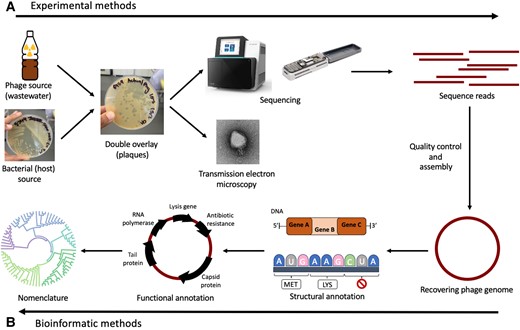
Overview of the steps in phage isolation and characterization. A, Experimental methods: the double overlay method facilitates plaque formation, helping isolate and select lytic phages from an environmental source. Transmission electron microscopy helps visualize the isolated phages to determine the broad taxonomic grouping. Concurrently, the process involves extracting the isolated phage’s DNA and subjecting it to sequencing. B, Bioinformatics methods: assembly of sequence reads allows for the recovery of complete genomes, accurate annotation, and phylogenetic classification. Abbreviations: LYS, lysine; MET, methionine.
 
 
Image Credits: Susanna R Grigson, Sarah K Giles, Robert A Edwards, Bhavya Papudeshi, Clinical Infectious Diseases (2023) 
Exploring Phage Therapy: From Biological Mechanisms to Future Directions

Exploring Phage Therapy: From Biological Mechanisms to Future Directions

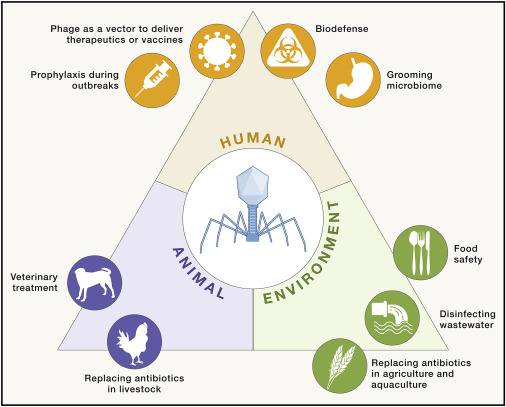
Potential phage therapy applications from the One Health perspective

In response to escalating antimicrobial resistance rates, the field of bacteriophage (phage) therapy, led by Robert T. Schooley and his team at the Center for Innovative Phage Applications and Therapeutics, Division of Infectious Disease and Global Public Health, University of California, San Diego, La Jolla, CA, is experiencing a resurgence of interest. Phages, which are natural predators of bacteria and were first discovered over a century ago, are now being extensively researched for their potential therapeutic applications.

For phages to be utilized effectively in therapy, certain criteria must be met. Firstly, they should ideally be lytic, meaning they actively destroy the bacterial host. Secondly, they need to efficiently kill the targeted bacteria. Lastly, thorough characterization is essential to ensure the exclusion of any potential side effects. Achieving these prerequisites requires a collaborative effort among various stakeholders.

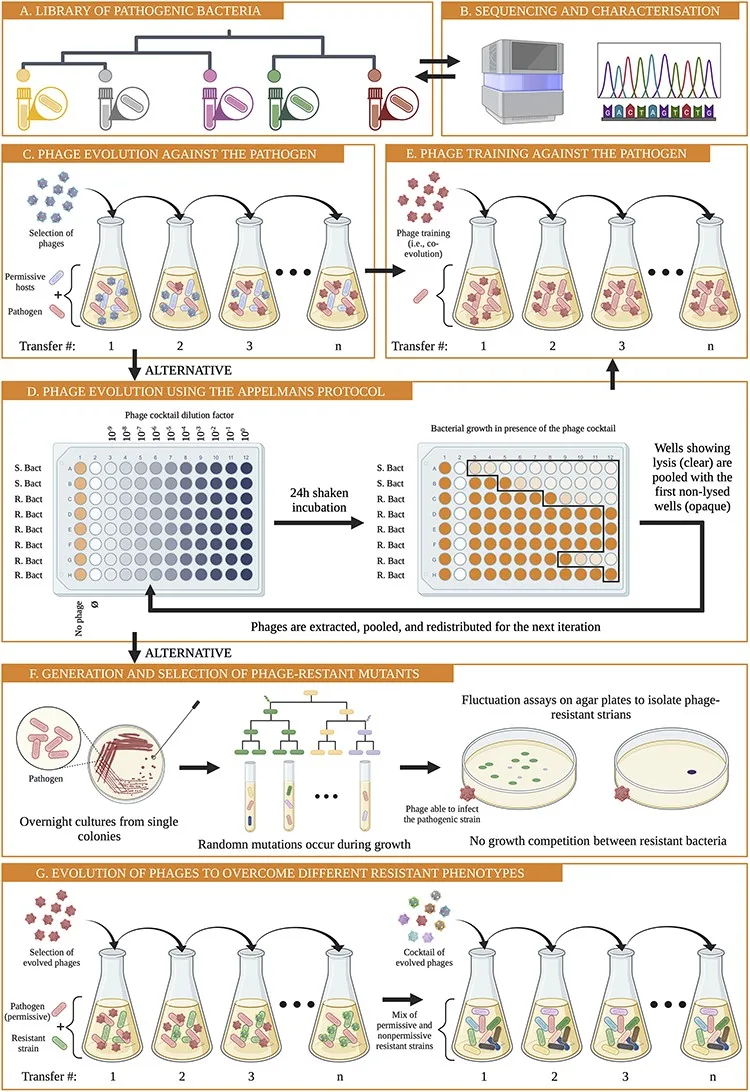
This review article offered an in-depth examination of the current state of phage therapy. It encompassed a wide range of topics, including the biological mechanisms underlying phage action, clinical applications of phage therapy, existing challenges in the field, and potential future directions. Of particular interest are discussions surrounding the use of naturally occurring phages as well as genetically modified or synthetic variants.

By shedding light on these critical aspects, this review aims to contribute to the ongoing dialogue surrounding phage therapy and its potential as a valuable tool in combating antimicrobial resistance.

Image Description:

Depicted are phage applications that could be implemented to address AMR arising from interactions between humans, animals, and the environment.


Read full review paper.

Phage Therapy Targets Gut Microbiota for Liver Disease Treatment

Phage Therapy Targets Gut Microbiota for Liver Disease Treatment

In a significant development, phage therapy is emerging as a solution against antimicrobial-resistant bacteria, marking a shift from conventional antibiotic treatments. Recognizing the intricate connection between bacterial microbiota and gastrointestinal/liver diseases, researchers are aiming to leverage phages’ precise bactericidal action for targeted editing of the gut microbiota.

Fujiki et al. provided an overview of the fundamental virological characteristics of phages and recent discoveries regarding the composition of the intestinal phageome and its alterations linked to liver diseases. Additionally, they examined preclinical and clinical investigations evaluating the efficacy of phage therapy in managing gastrointestinal and liver disorders, while also discussing future outlooks and obstacles in this field.

Preclinical studies indicate that targeted removal of harmful bacteria by phages can lead to improvements in various conditions like inflammatory bowel disease and liver diseases induced by ethanol consumption. However, well-designed clinical trials are necessary to enhance our understanding of phage therapy’s potential in treating gastrointestinal and liver diseases.

Image Description:

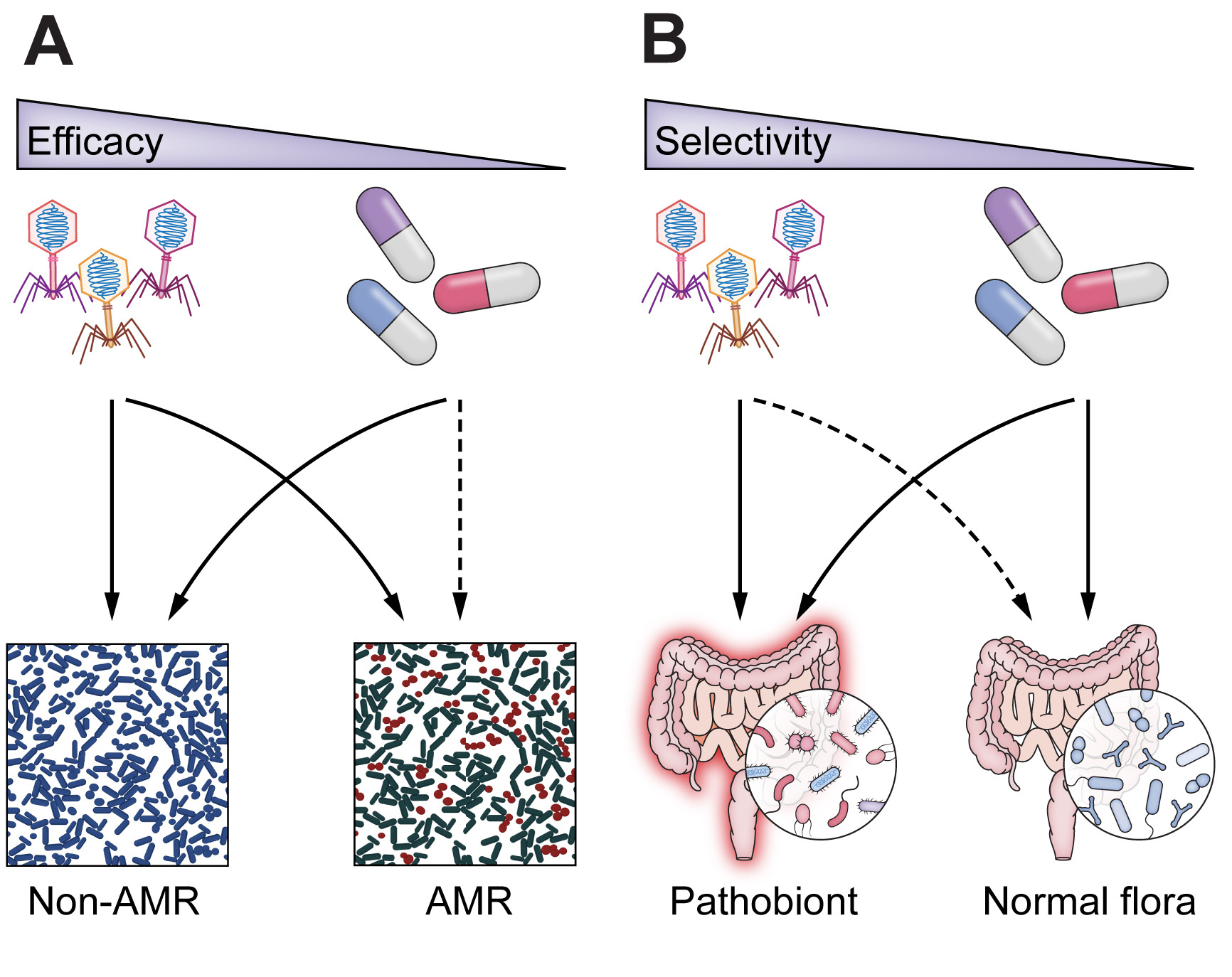
Advantages of phages over antibiotics in the context of addressing bacterial infections and dysbiosis.

(A) Antibiotics have been conventionally applied to bacterial infections; however, the use of antibiotics has led to the emergence of antimicrobial-resistant strains of bacteria, and there are cases in which antibiotics are not expected to be effective. On the other hand, killing of antimicrobial-resistant bacteria by phages is expected to be more effective because phages possess completely distinct bactericidal mechanisms compared to antibiotics. However, the narrow host range of phages may limit their application in the treatment of infectious diseases.
 
(B) There is concern that the use of conventional antibiotics may kill even useful microbes in the human body inducing dysbiosis. On the other hand, phages have a very specific host range. Therefore, phages have the potential to selectively eliminate pathobionts in the dysbiotic bacterial microbiota of patients. AMR, antimicrobial resistance.


Article DOI.

Virus Attacks Dormant Bacteria, Offering New Hope in Antibiotic Resistance Fight

Virus Attacks Dormant Bacteria, Offering New Hope in Antibiotic Resistance Fight

Virus Attacks Dormant Bacteria, Offering New Hope in Antibiotic Resistance Fight

After six years of research, teams from the University of Basel and ETH Zurich have discovered a potentially crucial weapon against antibiotic-resistant bacteria: a virus named Paride that preys on and kills dormant bacteria. This bacterium, Pseudomonas aeruginosa, which can cause severe respiratory diseases and potentially fatal pneumonia, often enters a dormant state as a defense mechanism, making it resistant to many forms of treatment. Paride, found on decaying plant matter in a Swiss cemetery, has shown remarkable efficacy in lab tests and mouse experiments when combined with the antibiotic meropenem, killing off 99% of the targeted bacteria. This significant advancement suggests a new method to tackle drug-resistant infections, though researchers emphasize that this is just the beginning of understanding and utilizing phages against superbugs.

Article DOI.


Bacteriophage Partnerships: Enhancing Stem Cell Transplant Success

Bacteriophage Partnerships: Enhancing Stem Cell Transplant Success

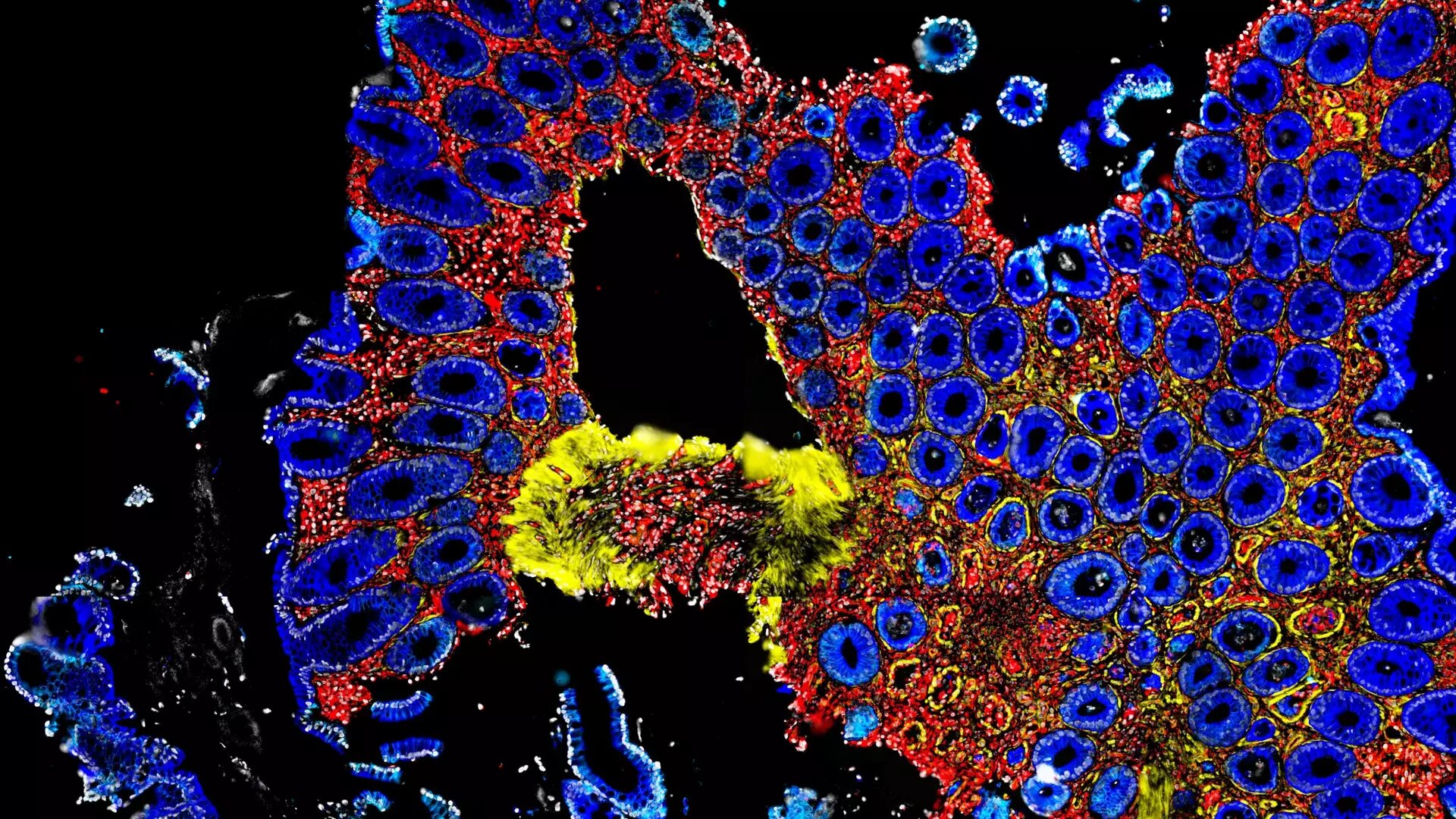
Intestinal tissue during a graft-versus-host reaction: Donor cells (red) attack the body of the patient. Credit: Sebastian Jarosch, Dirk Busch / TUM

After stem cell transplantation, the donated immune cells sometimes attack the patients’ bodies. This is known as graft versus host disease or GvHD. Researchers at the Technical University of Munich (TUM) and the Universitätsklinikum Regensburg (UKR) have shown that GvHD is much less common when certain microbes are present in the gut. In the future, it may be possible to deliberately bring about this protective composition of the microbiome.

Stem cell transplantation can save the lives of patients suffering from cancers such as leukemia. However, graft versus host reactions occur following around half of these procedures. In a sense, they are the reverse of the rejection response seen after organ donations, in which the body attacks the donated organ. Here, the donated cells attack the patient’s body, for instance, in the digestive tract.It has been known for some time that microbes in the gut play a role in determining whether GvHD occurs. A team working with Dr. Erik Thiele Orberg, who heads a research group at the Clinic and Polyclinic for Internal Medicine III of TUM’s Klinikum rechts der Isar, Ernst Holler, Senior Professor of Allogenic Stem Cell Transplantation at UKR, and Prof. Hendrik Poeck, executive senior physician at UKR’s Clinic and Polyclinic for Internal Medicine, describe in the journal Nature Cancer how the gut microbiome must be composed to provide protection.
 
78 patients observed

The researchers studied stool samples from 78 patients at the two university clinics and tracked them over two years following stem cell transplantation. They used the results to develop a risk index indicating the probability of a rejection reaction. “Instead of counting bacteria, we measured the quantities of certain metabolites produced by the microbes,” says Erik Thiele Orberg.

These immuno-modulatory microbial metabolites (IMMs) influence the immune system and the body’s regenerative capacity. “It is remarkable that a positive prognosis does not depend only on IMMs from bacteria,” says Dr. Elisabeth Meedt, a physician at UKR and co-first author of the article.  “We demonstrated that certain viruses in the gut – the bacteriophages – also play a role. This alone offers an impressive insight into the complex world of our gut microbiome.”

Better prognosis with low microbiome scores

“Patients with a low IMM risk index had a higher chance of survival, showed fewer graft vs. host reactions, and experienced fewer relapses,” says Hendrik Poeck. The metabolites are formed mainly by bacteria from the families Lachnospiraceae and Oscillospiraceae in combination with the bacteriophages.

Actively improving the probability of recovery

In the next step, the researchers at TUM and UKR want to predict and actively improve patients’ chances at a cure. “By precisely controlling the composition of fecal microbiota transplants, the gut could be colonized with specific consortia of bacteria and bacteriophages,” says Hendrik Poeck. “In the coming years, we want to find out whether we can use this approach to prevent graft vs. host reactions as well as relapses,” Initial experiments with mice have been successful. As a result, the procedure could now be tested in clinical trials with human patients.


News source: Technical University Munich.

 
Rapid Bench to Bedside Therapeutic Bacteriophage Production

Rapid Bench to Bedside Therapeutic Bacteriophage Production


An excellent paper by Luong et al. from San Diego State University has recently been published by Springer on Bacteriophage Therapy: From Lab to Clinical Practice. The comprehensive content of the paper includes:

1. Historical Context: Bacteriophages have been used in human therapeutics for over a century, with significant advancements in production techniques.

2. Modern Phage Preparations: Contemporary phage preparations are characterized by lower bacterial toxin content, reducing adverse effects and making them more suitable for therapeutic use.

3. Role in Treating MDR Infections: Due to their efficacy, therapeutic phages are increasingly being utilized for the compassionate treatment of multidrug-resistant infections.

4. Production and Ultrapurification Protocol: The article outlines a protocol for producing and ultrapurifying phages, capable of yielding over 10^9 plaque-forming units per mL for Gram-negative phages within 48 hours, compliant with FDA endotoxin limits for intravenous infusions.

5. Laboratory Requirements: The process requires a lab experienced in phage production techniques.

6. Process Illustrations and Safety Tips: Detailed illustrations and safety tips are provided to guide the removal of bacterial toxins from phage lysates.

7. Flexibility and Applications: While dependent on the phage strain, this approach is versatile and can be adapted for rapidly generating and purifying phages for various applications.

Article DOI.

Image Credits: Luong et al. Bacteriophage Therapy. Methods in Molecular Biology, vol 2734. 

How Bacteria Spot Viral Invasion and Ramp Up Immune Defenses?

How Bacteria Spot Viral Invasion and Ramp Up Immune Defenses?

A viral RNA produced during Φ80α-vir infection activates Ssc-CdnE03 in vitro

Researchers at The Rockefeller University’s Laboratory of Bacteriology have uncovered a novel mechanism through which bacteria defend against viral infections, known as the cyclic oligonucleotide-based antiphage signaling system (CBASS). This intricate immune response protects prokaryotes by triggering the production of cyclic oligonucleotides, activating proteins that induce the death of infected host cells.

Key Findings:

  • Staphylococcal phages produce a structured RNA called CBASS-activating bacteriophage RNA (cabRNA) from terminase subunit genes.
  • CabRNA binds to the CdnE03 cyclase, promoting cGAMP synthesis and activating the CBASS immune response to prevent phage infection.
  • Phages evading CBASS defense harbor mutations leading to longer cabRNA, hindering activation and revealing insights for combating antibiotic resistance.
  • Parallels exist between CBASS and animal immune responses, highlighting shared viral sensing mechanisms across diverse life domains.
  • CBASS cyclases, central to bacterial immune responses, are considered ancient relatives of animal cyclic GMP-AMP synthase (cGAS).
  • Unlike animal cGAS sensing viral DNA, CBASS in bacteria detects specific RNA structures, identified as cabRNA during phage infection.

Future Research:

  • Ongoing investigations will delve into cabRNA’s characteristics and its role in phage infection, potentially yielding breakthroughs in understanding bacterial defense systems.

Understanding bacterial defense mechanisms, especially CBASS, holds promise in addressing antibiotic resistance. The discovery suggests using specific phages that do not trigger CBASS responses, offering a potential avenue for future research in combating antimicrobial-resistant bacteria and advancing bacterial infection treatments.

Article DOI.

Phables: Advancing Phage Research for a Healthier Future

Phables: Advancing Phage Research for a Healthier Future

Processing workflow. Credits: Flinders Accelerator for Microbiome Exploration, College of Science and Engineering, Flinders University

In a significant leap forward for phage research, Flinders University’s College of Science and Engineering introduces “Phables”, a bioinformatics software program designed to address the challenges in identifying and characterizing phage genomes within fragmented viral metagenome assemblies. This innovative tool, inspired by the abstract’s motivation and results, marks a significant advancement in phage research.

Microbial communities profoundly influence human health and various environments, with bacteriophages or phages playing a crucial role in modulating bacterial communities. High-quality phage genome sequences are vital for advancing our understanding of phage biology, conducting comparative genomics studies, and developing phage-based diagnostic tools. However, existing viral identification tools often face challenges in viral assembly, resulting in genome fragmentation and incomplete recovery of phage genomes.

Phables tackles this issue by employing a novel computational method. It identifies phage-like components in the assembly graph, models each component as a flow network, and utilizes graph algorithms and flow decomposition techniques to identify genomic paths. Experimental results from viral metagenomic samples collected from different environments demonstrate that Phables outperforms existing tools, recovering over 49% more high-quality phage genomes on average.

Importantly, Phables has the capability to resolve variant phage genomes with over 99% average nucleotide identity—a feat that existing tools struggle to achieve. This ability to make fine distinctions contributes to a more comprehensive understanding of phage diversity and evolution.

Learn more about this fascinating tool.


Targeting Phage Therapy Team
LinkedIn | Facebook